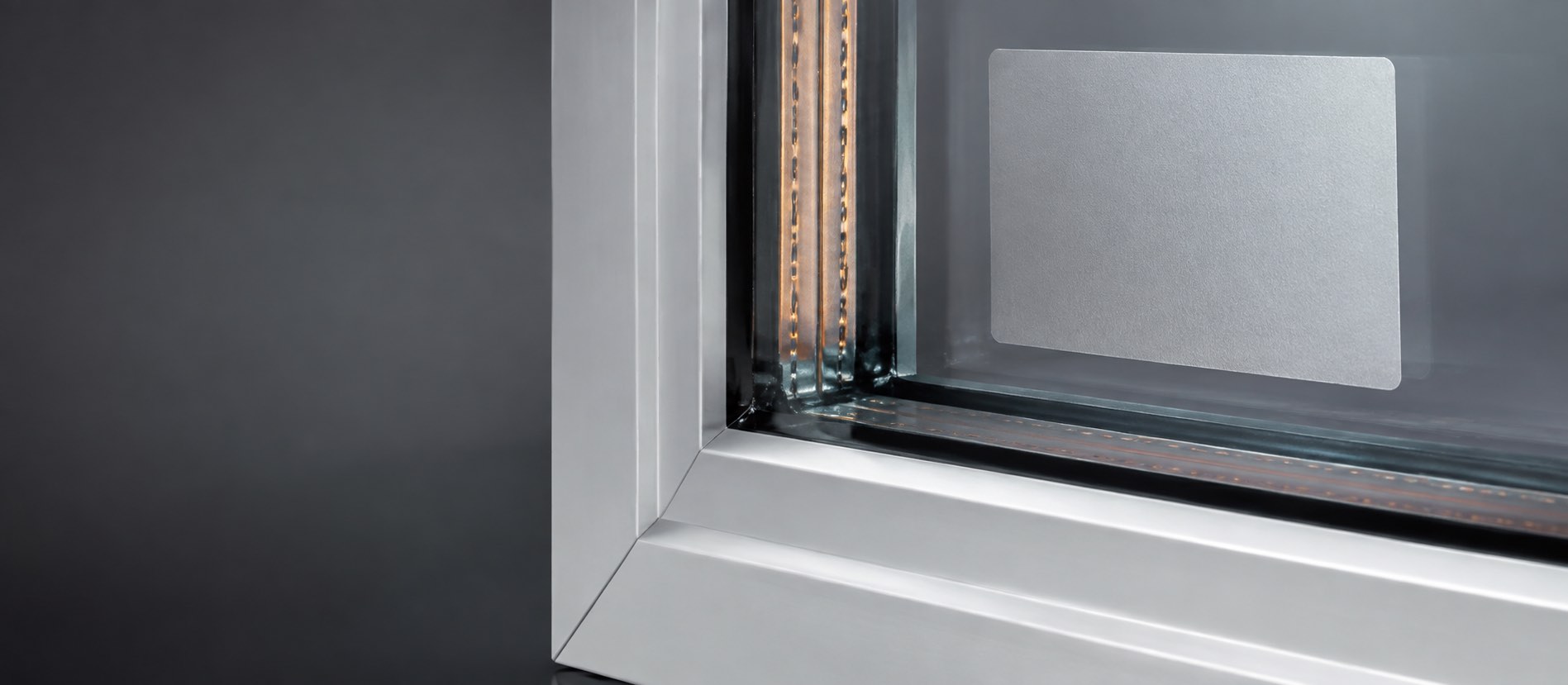
U-factor: how fast heat escapes
U-factor measures the rate of heat transfer through the assembly. Lower is better. It is the inverse of the R-value used for insulation, which is a common source of confusion — an R-5 window and a U-0.20 window are the same window described two ways.
The unit matters. Canadian literature normally reports U-factor in W/(m²·K); American literature reports it in Btu/(h·ft²·°F), and the numbers are roughly 5.68 times apart. A "U-0.28 window" from a US catalogue is about 1.59 W/(m²·K) — respectable in Georgia, unremarkable here. Check the unit before you compare two quotes.
| Expressed as | Value | Direction |
|---|---|---|
| U-factor (metric) | 1.20 W/(m²·K) | lower is better |
| U-factor (imperial) | 0.21 Btu/(h·ft²·°F) | lower is better |
| R-value (imperial) | R-4.7 | higher is better |
| RSI (metric) | 0.83 m²·K/W | higher is better |
Energy Rating (ER): the Canadian composite
ER is the metric Canadian programs actually lead with, and it exists because U-factor alone tells an incomplete story in a heating climate. ER combines three effects into a single number: heat loss through the assembly, useful solar heat gained through the glazing, and heat lost to air leakage. Higher is better.
The composite is a genuine improvement for a cold climate — a window that loses slightly more heat but admits considerably more winter sun can be the better performer over a heating season, and ER captures that where U-factor does not. It is also why a south-facing and a north-facing window with identical hardware can be argued to different conclusions.
ER is calculated under CSA procedures; CSA Group maintains the A440 family of standards that govern how windows are tested and rated in Canada, and Natural Resources Canada uses the result to set ENERGY STAR thresholds for windows, doors and skylights. Those thresholds have been revised more than once — most recently onto a single national criterion rather than the older multi-zone approach — so treat any specific number you read on a dealer's site, including a number more than a year or two old, as something to verify against NRCan directly.
Solar heat gain coefficient (SHGC)
SHGC is the fraction of incident solar energy that gets through the glazing, expressed between 0 and 1. A unit at 0.25 admits a quarter of it; a unit at 0.60 admits well over half. Neither is "better" in the abstract — it depends entirely on which way the window faces and what the summer looks like where you live.
- South elevations in a heating-dominated climate generally benefit from a higher SHGC, provided there is enough thermal mass or ventilation to keep the room from overheating in shoulder season.
- West elevations take the worst of the late-afternoon summer load. A lower SHGC here is usually the comfort decision, whatever the heating-season arithmetic says.
- North elevations receive little direct gain, so SHGC matters much less than U-factor does.
Air leakage
Air leakage is rated in litres per second per square metre of unit at a defined test pressure — again, lower is better. It is the number people ignore, and it is the one most likely to explain a complaint. A draught felt at ankle height near a window is more often air movement than radiant heat loss, and air movement is the failure mode that installation quality controls.
The catch. Every one of these figures is measured on a unit in a test frame under laboratory conditions. None of them describes the window as installed in your wall. That gap is the subject of the envelope around it.
How to compare two quotes honestly
- Confirm both figures are whole-unit, not centre-of-glass.
- Confirm both U-factors are in the same unit system.
- Compare ER as the headline if the house is heating-dominated, which in Canada is nearly everywhere.
- Check SHGC per elevation, not per house.
- Ask what the air-leakage rating is, and then ask, separately, how the opening will be sealed. They are two different questions.